
Scientific Communication & Stakeholder Engagement
The Pacific is getting bluer and greener. Scientists suspect microplastics
- Organisation
- University of Bergen
- Source
- ThePrint: Science, published
- On SHODHX
· Approved by Sameer Gupta
The study, conducted by researchers at the University of Bergen in Norway, analysed three satellite datasets between 2002 and 2022.
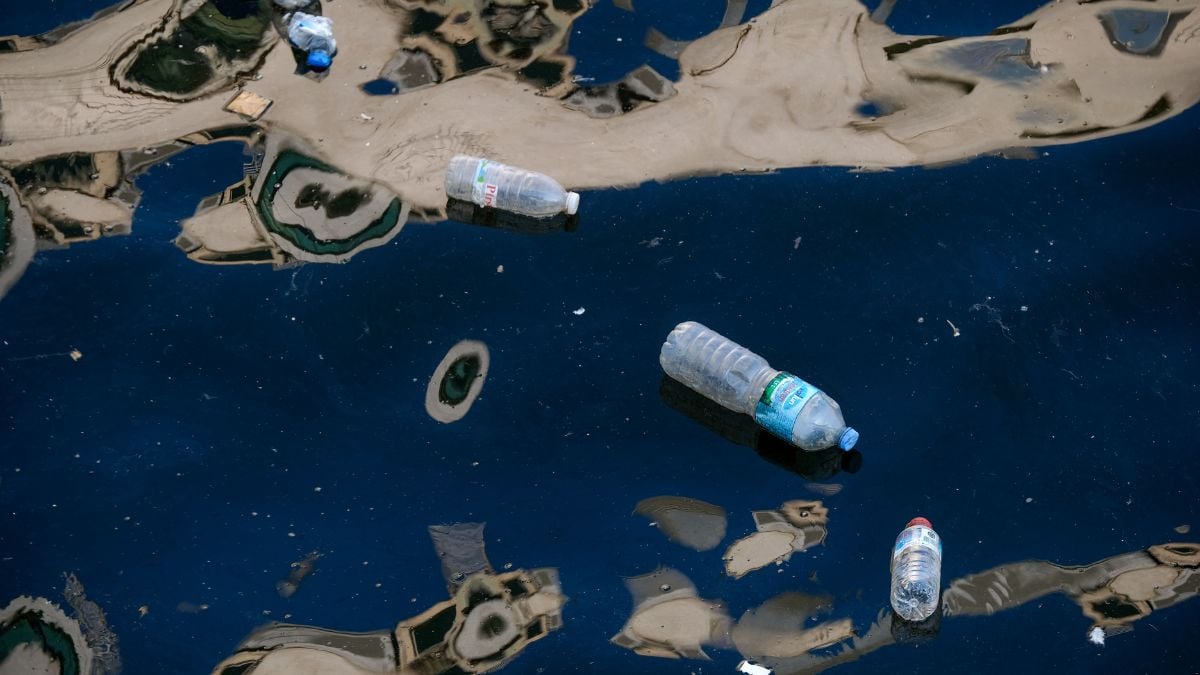
A new study suggests that the Great Pacific Garbage Patch may be changing the colour of the seawater around it. Published on 5 November in Communications Earth & Environment, the work was carried out by researchers at the University of Bergen. By analysing three satellite datasets that span 2002 to 2022, the team found that parts of the region have brightened in blue and green wavelengths over the past two decades. In some locations blue reflectance rose by about ten per cent, while green increased by two to four per cent, together giving the water a more cyan-like appearance.
The Garbage Patch sits inside a large system of circulating currents called a gyre between Hawaii and California; these currents tend to trap and concentrate floating debris, including microplastics. To understand how that debris might change what satellites see, the researchers compared how tiny plastic particles interact with light versus naturally occurring seawater constituents such as phytoplankton and mineral particles. In laboratory experiments and computer simulations they found that plastic fragments tend to absorb little visible light but scatter it strongly, producing a particular optical signature that can change the balance of blue and green light reflected from the sea surface.
The team combined their experimental results with the satellite record and found that when microplastic particles were included in simulations, the observed pattern of brightening in both blue and green light near the Garbage Patch became more than four times as likely. Despite this, the researchers emphasise that satellites have not directly imaged plastic pieces; instead, the analysis detects a colour shift that is consistent with the optical behaviour of microplastics. Other environmental changes — for instance in phytoplankton, dissolved organic matter or mineral particles — could also produce similar shifts, so causation is not yet proven. "We’re still one step away from proving definitively that microplastics are causing the shift in color," one of the authors told a science outlet.
To settle the question, the team says ship-based sampling is necessary: researchers must collect seawater from the area and measure both microplastic concentrations and the water’s optical properties to confirm the link. If this hypothesis is validated, the approach could become a new way to monitor plastic pollution across large swathes of ocean without relying only on collecting many water samples. For India, and for other countries, such a remote sensing method could, if proven, help flag likely hotspots for targeted sampling and follow-up. More broadly, the study points to a path for future research that combines satellite observations, lab experiments and field verification to distinguish plastic signals from natural variability in ocean colour.
This summary was written with AI from the original story and checked by a SHODHX editor.
Original report by ThePrint: Science, .
Spotted an error? Tell us, and we will correct it.